
Safety Sensor Replacement in Boston & Greater Boston
Independent local contractors · Price explained before work starts · Boston and 61 nearby towns
Swapping failed photo-eyes for a compatible pair and testing the reversal.
At a glance Who does the work: an independent local contractor · Price: explained on site before work starts · Area: Boston and 61 nearby towns · How: the short form
Inside the service: safety sensor replacement
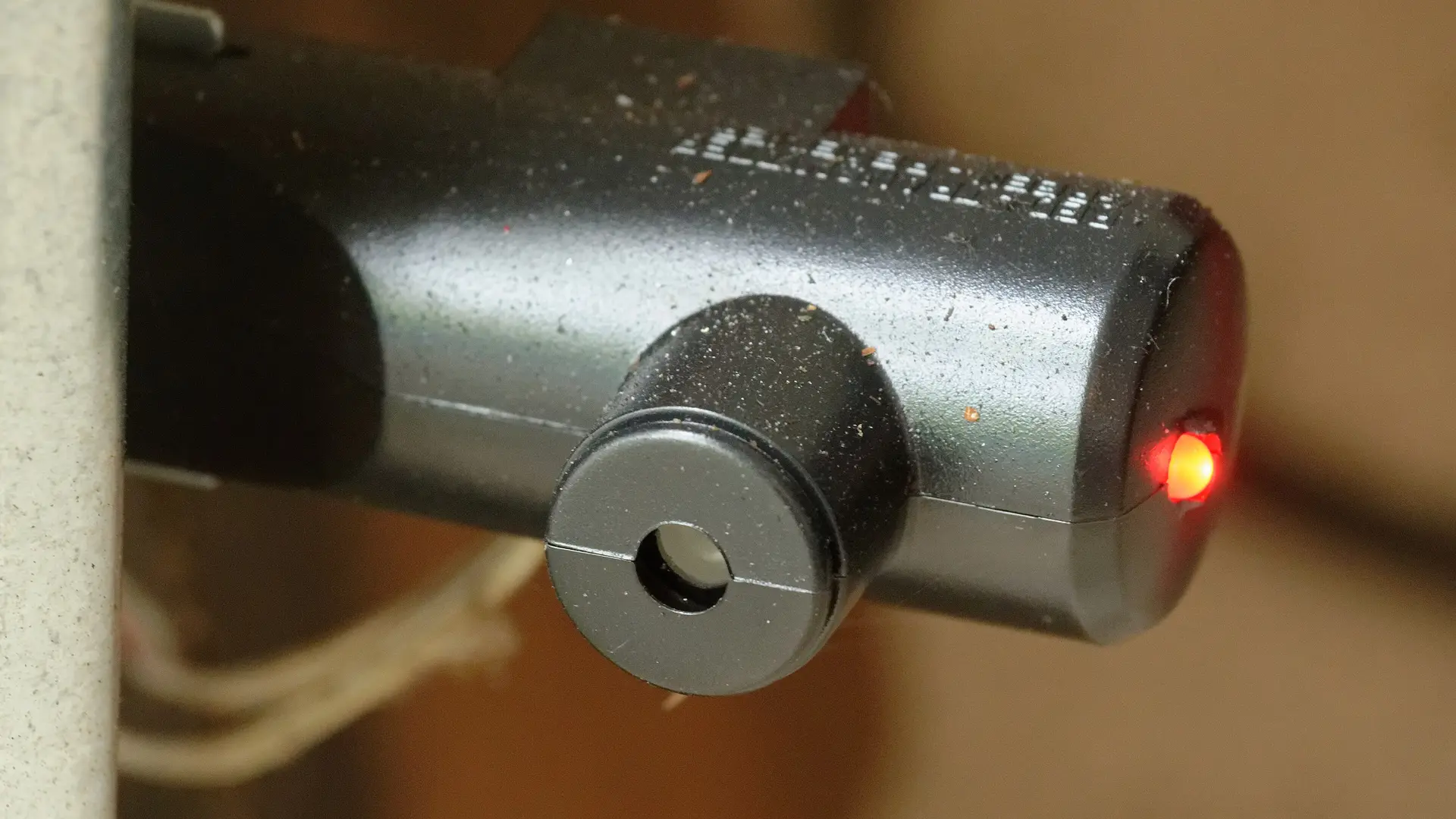
Sensors do fail outright. Water gets inside the housing, a lens cracks, a surge during a storm damages the electronics, or years of salt corrode the terminals beyond cleaning. The usual clue is an indicator that stays dark even though the wire feeding it tests live, or a pair that will not hold a steady link however carefully it is aimed.
Replacement units must suit the opener. Sensors are not universal across makers, and some older openers use connectors or signaling that current parts do not match. A technician identifies the opener, fits a compatible pair on the existing wiring if it is sound, aims them and runs the full reversal test. If no compatible sensors exist, you will hear that plainly along with the alternatives.
Garage doors across Greater Boston
Around Boston, the same street can hold a century-old carriage house, a triple-decker with a shared driveway and a renovated home with a smart opener. Local contractors see all of it, which is why a request here goes to someone who works in your part of the metro area rather than to a distant call center.
Winter does most of the damage here. Cold thickens old lubricant, steel springs get brittle, bottom seals freeze to the slab, and salty meltwater sits on the lowest hardware for months. Summer humidity then swells wood doors and jambs.
How to tell it is time to ask for help
If any of this sounds familiar, stop cycling the door and ask for a technician:
- No indicator light on one sensor at all
- A cracked, fogged or water-filled lens
- Green or white crust on the wire terminals
- Sensors stopped working right after a power surge
- The door closes fine at night but not on sunny afternoons
- A sensor bracket got bumped by a bin, bike or shovel
Why it fails, and why it fails here
The two sensors must see each other across the opening. A sending unit emits an invisible infrared beam and the receiving unit confirms it. Anything that breaks the link stops the door: a bracket knocked a fraction off line, a cobweb or dirt film on the lens, low sun shining straight into the receiver, or a staple that has cut through the thin low-voltage wire.
Garages around Boston are hard on sensors because they sit right in the splash zone. Slush and salt spray from the car coat the lenses and corrode the wire terminals. Snow piled against the track can block the beam, shovels knock the brackets, and frost heave shifts the track they are mounted to. After a storm-related power surge, a sensor or the opener's logic board may stop responding.
What to do right now, before anyone arrives
- Stop using the doorDo not keep pressing the remote. A door with a failed spring, cable or track gets worse, and riskier, with every cycle, so leave it exactly where it is.
- Keep people, pets and vehicles clearTreat the opening as off limits. If the car is outside, leave it outside; if it is inside, leave it there for now.
- Do not pull the red release cord with the door upThe emergency release disconnects the opener. If a spring or cable has failed, nothing else is holding the door. Use the release only when the door is fully closed.
- Note what you see and hearWrite down what happened: a bang, grinding, clicking, where the door stopped, what the opener light does. Those details let a technician arrive prepared.
- Send a requestTell us the job type and your town. The request is passed to an independent local contractor, who calls you back to talk it through.
How a request works, step by step
- Send the short requestPick the job that sounds closest, choose Greater Boston, and leave a name, phone number and ZIP code.
- We pass it to a local contractorYour request goes to an independent garage door contractor who serves Greater Boston. Boston Garage Door does not do the repair itself.
- The technician calls youExpect a phone call from the contractor. Describe the symptoms and ask when they can come out.
- They look at the door and explain the priceOn site, the technician checks the whole system and explains the options and the price before any work starts.
- The decision is yoursIf the plan and the price make sense, you approve it. If not, you are free to say no.
Timing and urgent situations
We will not put a response time in writing that we cannot control. What we can do is pass your request on right away; the contractor tells you when they can be there. Mention anything urgent, such as a door that will not close at night, in the first sentence.
How safety sensor replacement is priced
There is no price list on this site, on purpose. The cost of safety sensor replacement depends on the door in front of the technician, and a number invented online would be either wrong or bait. These are the things that actually move the quote:
- Whether the fix is an adjustment, a wiring repair or new sensors
- Length and routing of the wire run back to the opener
- Age of the opener and whether compatible sensors are still made
- Bent brackets or track sections that need straightening
- Whether the fault turns out to be in the opener's circuit board
Ask what is included and what could change the figure. You approve the price before any work begins.
What is safe to do yourself, and what is not
Safe steps: wipe both lenses with a soft dry cloth, clear anything from the beam path, and check that each sensor's light is on and steady. You can nudge a bracket gently by hand until the lights stop blinking. Do not bypass, tape together or relocate the sensors to get the door closing. They are a required safety device, and a door closing blind can injure someone.
Door and opener brands
Parts and programming differ between makers more than people expect. The pages for Chamberlain, Genie, Craftsman, Wayne Dalton, Clopay and Amarr explain what tends to go wrong with each. This site has no ties to those companies; the names simply describe what is in your garage.
Prevent the next breakdown
- Wipe the sensor lenses whenever you sweep the garage, especially after slushy winter weeks.
- Store bins, bikes and garden tools well away from the bottom of the tracks.
- Keep snow, leaves and cobwebs from building up anywhere in the beam path.
- Glance at both indicator lights now and then so you know what normal looks like.
Where requests are covered
Requests are taken for Boston and 61 nearby cities and towns in Suffolk, Middlesex, Norfolk, Essex and Plymouth counties. Pick your town:
Middlesex County
Norfolk County
How Boston Garage Door works
- Your details stay on taskWhat you send is passed to a contractor for this request. It is not sold for unrelated marketing.
- Repair and replace, both on the tableAsk the technician to lay out the repair and the replacement side by side when a door is near the end of its life.
- A referral service, said plainlyBoston Garage Door connects homeowners with independent local garage door contractors. It is not the company that does the repair.
- One short requestJob type, town, name, phone and ZIP code. No calling around, no long questionnaire.
- Local, independent contractorsThe request goes to a contractor who works in Greater Boston, not to a national call center.
- The price is explained firstThe technician looks at the door and explains the options and the price before any work starts.
Explore related services and areas
Looking for something more specific? These pages cover the services and communities people ask about most:
- Garage Door Sensor Repair
- Photo-Eye Alignment
- Sensor Wiring Repair
- Garage Door Sensor Repair in Boston
- Garage Door Sensor Repair in Cambridge
- Garage Door Sensor Repair in Somerville
- Garage Door Sensor Repair in Brookline
- Garage Door Sensor Repair in Newton
A 60-second glossary
- R-value
- A measure of how well an insulated door resists heat flow. Higher numbers insulate more.
- Astragal
- Another name for the flexible seal along the bottom edge of the door.
- Torsion spring
- A tightly wound spring on a shaft above the door. It twists to store the energy that lifts the door's weight.
- Extension spring
- A long spring beside each horizontal track that stretches as the door closes. It should always have a safety cable through it.
- Lift cable
- The steel cable on each side that connects the bottom of the door to the drum and carries its weight.
- Cable drum
- The grooved wheel at each end of the torsion shaft that winds the lift cable as the door rises.
Get safety sensor replacement in Greater Boston moving
One request, one callback. The technician explains what the door needs and what it costs, and you decide.
Frequently asked questions
Do both sensors have to be replaced together?
They are normally sold and installed as a matched pair, and replacing both avoids mixing an aged unit with a fresh one. If only one has failed and an exact match is available, a technician may offer a single-unit swap. Ask which they recommend.
Can I use any brand of sensor?
Generally no. Each opener maker designs sensors for its own control boards, and the wrong type will not communicate even if the wires connect. Giving the technician the opener's model label, usually found on the motor housing, helps them bring the right parts.
Can sunlight really stop the door from closing?
Yes. When low sun shines directly into the receiving sensor it can drown out the infrared beam. This tends to happen at the same hour each day in certain seasons. A technician can swap the sensor positions, add a shade or adjust the aim to cure it.
Is it legal to run an opener without sensors?
Residential openers have been required to include a secondary entrapment protection device, almost always photo-eyes, under the UL 325 standard from 1993 onward. An opener built to that standard will not close normally without them. Removing or defeating them takes away protection your household relies on.
What does sensor repair cost?
A technician prices it after diagnosing the fault. A simple realignment is a smaller job than tracing a broken wire through a finished ceiling or replacing the sensor pair. You hear the options and the price before any work starts, and the decision stays with you.
Is this the company that does the work?
Boston Garage Door is a service that connects homeowners with local contractors. The work itself is done by the independent garage door contractor who takes your request.
Do you give prices online?
No. The cost depends on the door, the parts involved and what the technician finds, so the contractor quotes after looking at it and explains the price before any work starts.
The power is out and the door will not open. What can I do?
With the door fully closed, pull the red release cord and lift by hand. A balanced door lifts easily. If it feels like dead weight, a spring has probably failed, so stop and ask for a technician.
Should both springs be replaced if only one broke?
It is common advice, because both springs have done the same number of cycles and the second is usually close behind. Ask the technician to explain the choice for your door before agreeing.
How long do garage door springs last?
Standard springs are commonly rated around 10,000 cycles, which is several years of ordinary use. Heavy use, cold winters and corrosion shorten that. Higher-cycle springs are available and last longer.