
Photo-Eye Alignment in Boston & Greater Boston
Independent local contractors · Price explained before work starts · Boston and 61 nearby towns
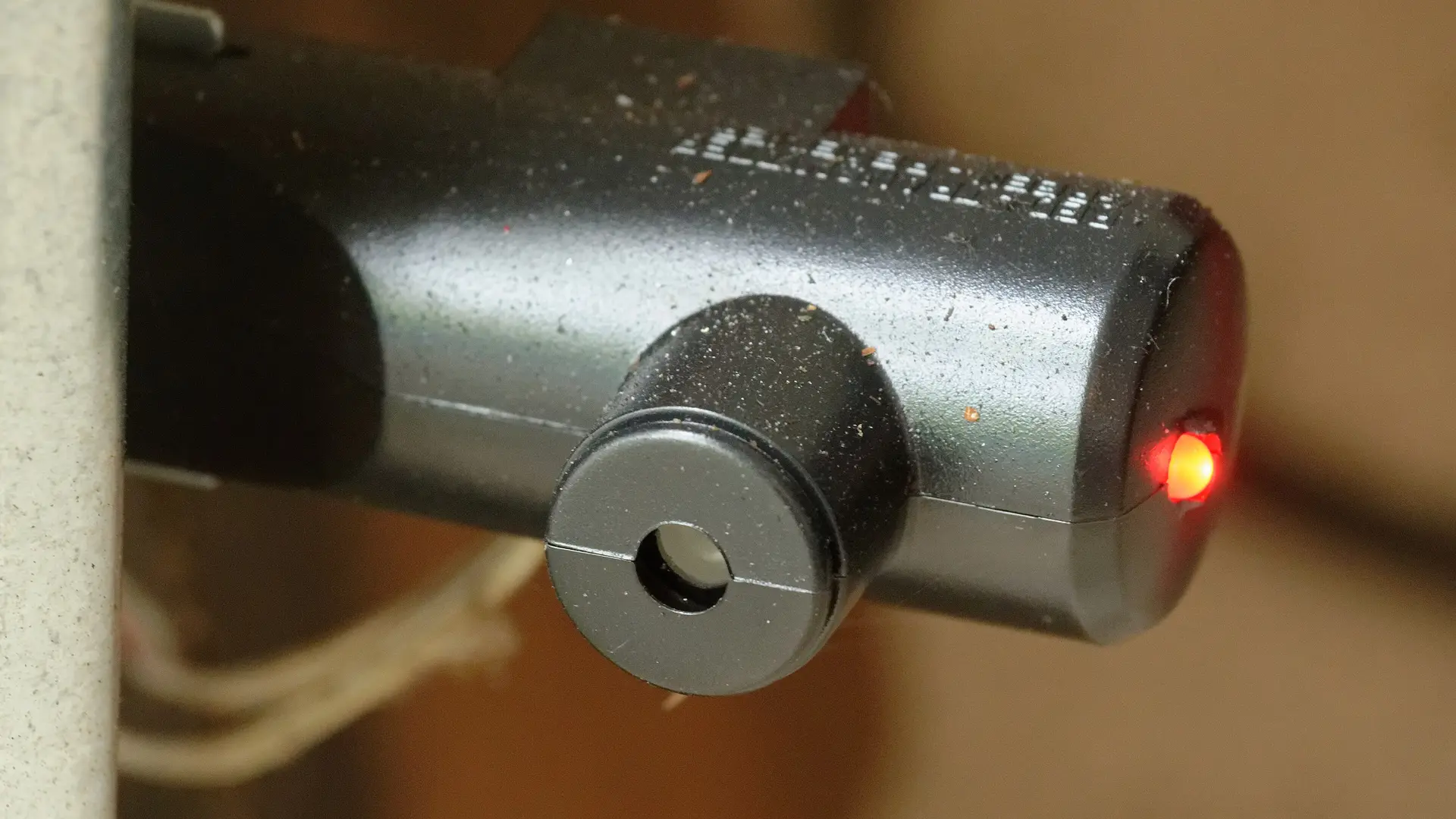
Re-aiming the two sensors so the beam connects and the door closes normally.
At a glance Who does the work: an independent local contractor · Price: explained on site before work starts · Area: Boston and 61 nearby towns · How: the short form
Inside the service: photo-eye alignment
Alignment is the most common sensor fix. Each photo-eye is held on a thin steel bracket clipped or bolted to the track or the wall, and it takes very little force to turn one a few degrees. When that happens the receiving eye loses the beam, its indicator flickers, and the opener treats the opening as blocked every time you try to close.
A technician typically loosens the wing nut or bracket screw, sights one sensor at the other, and tightens it once the indicator holds solid. Both units should sit at the same height, no more than about six inches above the floor. The door is then run several times, and the beam is deliberately broken mid-close to confirm it reverses as it should.
Why local knowledge matters around Boston
Around Boston, the same street can hold a century-old carriage house, a triple-decker with a shared driveway and a renovated home with a smart opener. Local contractors see all of it, which is why a request here goes to someone who works in your part of the metro area rather than to a distant call center.
Winter does most of the damage here. Cold thickens old lubricant, steel springs get brittle, bottom seals freeze to the slab, and salty meltwater sits on the lowest hardware for months. Summer humidity then swells wood doors and jambs.
Warning signs worth acting on
How do you know it is time to ask? Homeowners usually describe one or more of these:
- A flickering light on the receiving sensor
- The door closes when you press the bracket with your hand
- Trouble began after something hit the track
- Sensors visibly pointing in different directions
- One sensor light is off, dim or blinking
- The door closes fine at night but not on sunny afternoons
The root causes behind photo-eye alignment trouble
The two sensors must see each other across the opening. A sending unit emits an invisible infrared beam and the receiving unit confirms it. Anything that breaks the link stops the door: a bracket knocked a fraction off line, a cobweb or dirt film on the lens, low sun shining straight into the receiver, or a staple that has cut through the thin low-voltage wire.
Garages around Boston are hard on sensors because they sit right in the splash zone. Slush and salt spray from the car coat the lenses and corrode the wire terminals. Snow piled against the track can block the beam, shovels knock the brackets, and frost heave shifts the track they are mounted to. After a storm-related power surge, a sensor or the opener's logic board may stop responding.
Do this first: a homeowner checklist
- Stop using the doorLeave the door in its current position. Running a damaged door again can bend sections, strip the opener gear or drop the door.
- Keep people, pets and vehicles clearA door that is crooked, hanging or stuck partway can move without warning. Keep the opening and the area under the door clear until a technician has made it safe.
- Do not pull the red release cord with the door upThe red handle is for a door that is all the way down. Pulling it with the door raised and a broken spring can let the full weight fall.
- Note what you see and hearA ten-second look helps: a gap in the spring, a slack cable, a roller out of the track, blinking sensor lights, or a hum from the opener with no movement.
- Send a requestFill in the short form with the job, your town and a phone number. A local technician calls back, and you can ask about timing then.
From request to repair: the process
- Tell us what the door is doingJob type, your town, name, phone and ZIP code. It takes under a minute, and you only describe the problem once.
- The request goes to a local technicianAn independent garage door contractor covering Greater Boston receives the request. That contractor, not this site, does the work.
- You get a callbackThe technician calls to ask what the door is doing and to arrange a visit. That call is the moment to ask about timing.
- Options and price, before any workThe technician inspects the door, tells you what failed and why, and lays out the choices and the cost before touching a tool.
- You decideGo ahead, wait, or get a second opinion. Sending a request does not commit you to anything.
How soon can someone look at it?
How soon a technician can come depends on the contractor's schedule that day, so we do not promise a time. Ask when they call. If a car is shut in, or the door is stuck open and the house is not secure, say that first so it can be handled as urgent.
How photo-eye alignment is priced
We do not publish prices for photo-eye alignment. A fair price comes from looking at the door, so the technician quotes on site. Expect the quote to depend on:
- Whether the fix is an adjustment, a wiring repair or new sensors
- Length and routing of the wire run back to the opener
- Age of the opener and whether compatible sensors are still made
- Bent brackets or track sections that need straightening
- Whether the fault turns out to be in the opener's circuit board
Before you agree to anything, ask for the complete price: parts, labor and any return visit. A straightforward contractor will explain it before starting.
DIY or technician? An honest answer
Safe steps: wipe both lenses with a soft dry cloth, clear anything from the beam path, and check that each sensor's light is on and steady. You can nudge a bracket gently by hand until the lights stop blinking. Do not bypass, tape together or relocate the sensors to get the door closing. They are a required safety device, and a door closing blind can injure someone.
Brands local contractors commonly work on
Most garages here have an opener or door from one of a handful of makers: Marantec, CHI Overhead Doors, LiftMaster, Chamberlain, Genie and Craftsman. Tell the technician which one you have, and the model if it is printed on the unit, so they can arrive with the right information. Brand names are used only to identify equipment.
Prevent the next breakdown
- Wipe the sensor lenses whenever you sweep the garage, especially after slushy winter weeks.
- Store bins, bikes and garden tools well away from the bottom of the tracks.
- Keep snow, leaves and cobwebs from building up anywhere in the beam path.
- Glance at both indicator lights now and then so you know what normal looks like.
Coverage across Greater Boston
Requests are taken for Boston and 61 nearby cities and towns in Suffolk, Middlesex, Norfolk, Essex and Plymouth counties. Pick your town:
Middlesex County
Norfolk County
What this service does, and what it does not
- No pressureYou hear the options and decide. Sending a request does not commit you to a repair.
- Your details stay on taskWhat you send is passed to a contractor for this request. It is not sold for unrelated marketing.
- Repair and replace, both on the tableAsk the technician to lay out the repair and the replacement side by side when a door is near the end of its life.
- A referral service, said plainlyBoston Garage Door connects homeowners with independent local garage door contractors. It is not the company that does the repair.
- One short requestJob type, town, name, phone and ZIP code. No calling around, no long questionnaire.
- Local, independent contractorsThe request goes to a contractor who works in Greater Boston, not to a national call center.
Related pages
Looking for something more specific? These pages cover the services and communities people ask about most:
- Garage Door Sensor Repair
- Safety Sensor Replacement
- Sensor Wiring Repair
- Garage Door Sensor Repair in Boston
- Garage Door Sensor Repair in Cambridge
- Garage Door Sensor Repair in Somerville
- Garage Door Sensor Repair in Brookline
- Garage Door Sensor Repair in Newton
Garage door terms worth knowing
- Photo-eye
- The pair of safety sensors near the floor. If the beam between them is broken, the opener will not close the door.
- Travel limit
- The opener setting that tells the door where fully open and fully closed are.
- Force setting
- How hard the opener pushes before it decides something is in the way and reverses.
- Jackshaft opener
- A wall-mount opener that turns the torsion shaft directly, leaving the ceiling clear. Useful with low or cluttered ceilings.
- Cycle rating
- How many open-and-close cycles a spring is built for. Standard springs are commonly rated around 10,000 cycles.
- R-value
- A measure of how well an insulated door resists heat flow. Higher numbers insulate more.
Send the request in under a minute
One request, one callback. The technician explains what the door needs and what it costs, and you decide.
Frequently asked questions
Why do my sensors keep drifting out of line?
Usually the bracket is loose, bent or mounted to a track that vibrates. Thin brackets also get kicked and bumped at ankle height. A technician can stiffen or remount the bracket, sometimes to the wall instead of the track, so the aim holds.
How high should the sensors be mounted?
The usual guidance is no higher than six inches above the garage floor, so the beam catches a small child or a pet lying down. Mounting them higher to avoid bumps defeats their purpose. If they keep getting hit, a guard or sturdier bracket is the right answer.
What does sensor repair cost?
A technician prices it after diagnosing the fault. A simple realignment is a smaller job than tracing a broken wire through a finished ceiling or replacing the sensor pair. You hear the options and the price before any work starts, and the decision stays with you.
What do the sensor light colors mean?
Colors vary by opener maker, so there is no single rule. In general one unit shows a steady light when it has power and the other shows a steady light when it sees the beam. A blinking, dim or dark light on either side signals a problem there.
Why does my door close only when I hold the wall button?
Holding the wall button is a built-in override that tells the opener you are watching the door. If it works that way but not from the remote, the opener believes the photo-eye beam is blocked. That points to the sensors or their wiring, not the motor.
Is this the company that does the work?
Boston Garage Door is a service that connects homeowners with local contractors. The work itself is done by the independent garage door contractor who takes your request.
Do you give prices online?
No. The cost depends on the door, the parts involved and what the technician finds, so the contractor quotes after looking at it and explains the price before any work starts.
How long does a typical repair take?
Many common repairs are finished in a single visit, but it depends on the fault and on parts. The technician can tell you once they have seen the door.
Which towns do you cover?
Boston and 61 nearby cities and towns across Suffolk, Middlesex, Norfolk, Essex and Plymouth counties. Pick your town in the form; if it is not listed, choose the last option and name it when the technician calls.
What should I have ready when the technician calls?
What the door is doing, any sounds it made, whether it is up, down or stuck partway, the opener brand if you can see it, and your town and ZIP code.