
Balance & Force Testing in Boston & Greater Boston
Independent local contractors · Price explained before work starts · Boston and 61 nearby towns
Checking that the springs carry the door's weight and the opener is not forcing it.
At a glance Who does the work: an independent local contractor · Price: explained on site before work starts · Area: Boston and 61 nearby towns · How: the short form
Inside the service: balance and force testing
A properly balanced door stays where you leave it. With the opener disconnected, a technician typically lifts the door to about waist height and lets go. If it drops, the springs have weakened; if it climbs, they are wound too tight. Either way the opener ends up doing work it was never built for, and its gears and motor wear early.
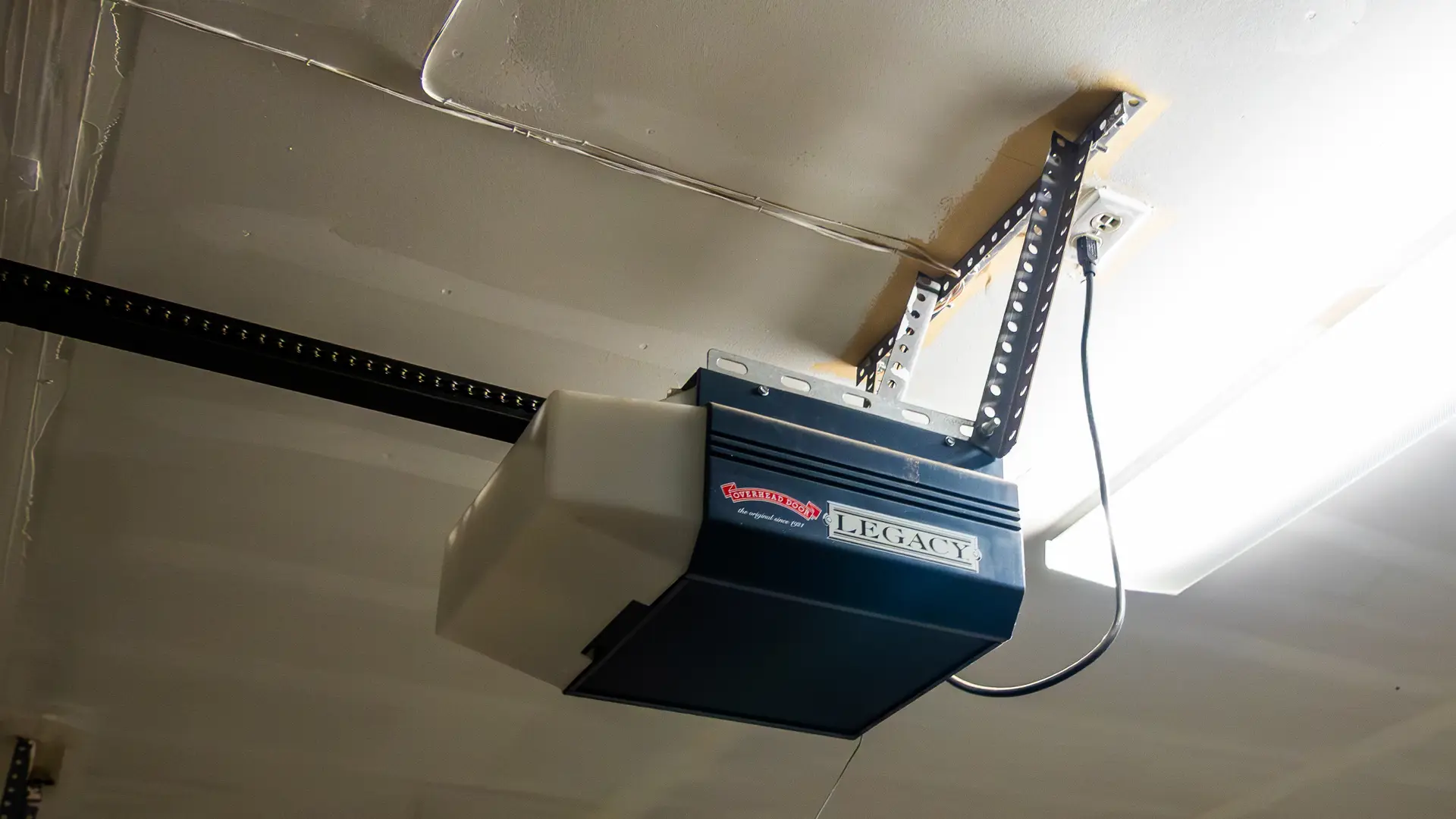
Force testing looks at the opener side. The technician checks how hard the door pushes down before it reverses and whether the travel limits stop it cleanly at the floor and at full open. Correcting balance means adjusting spring tension, which involves winding bars and stored energy. That step belongs to a trained person only, never to a homeowner with a wrench.
Why local knowledge matters around Boston
Around Boston, the same street can hold a century-old carriage house, a triple-decker with a shared driveway and a renovated home with a smart opener. Local contractors see all of it, which is why a request here goes to someone who works in your part of the metro area rather than to a distant call center.
New England weather is hard on garage door hardware. Road salt and sand ride in on the car and settle on the bottom brackets, cables and tracks; freeze-thaw cycles work on seals and wood; and the first deep cold of the year is when tired springs tend to give out.
Signs you need balance and force testing in Greater Boston
If any of this sounds familiar, stop cycling the door and ask for a technician:
- The door slams down the last foot instead of settling gently
- It drifts open or shut when left halfway by hand
- The opener lifts slowly and sounds like it is working hard
- The door reverses at the floor even with nothing in its path
- Nobody has looked at the springs or cables in years
- The door feels heavy when you lift it by hand
What causes these problems?
Every open-and-close cycle flexes the springs, rolls the bearings and tugs on the hinges. Over thousands of cycles, fasteners back out, rollers wear flat and springs slowly lose strength, so the door gets heavier than the opener expects. None of this happens overnight, which is why a door can seem fine right up until a cable frays or a spring snaps.
New England adds its own wear. Road salt and sand ride in on your tires and settle on the bottom brackets, cables and lower track sections, where they hold moisture against the steel. Freeze-thaw cycles shift slabs and framing slightly, and humid summers thicken old grease into a paste that collects grit. A door here simply needs attention more often than one in a dry climate.
Do this first: a homeowner checklist
- Stop using the doorLeave the door in its current position. Running a damaged door again can bend sections, strip the opener gear or drop the door.
- Keep people, pets and vehicles clearA door that is crooked, hanging or stuck partway can move without warning. Keep the opening and the area under the door clear until a technician has made it safe.
- Do not pull the red release cord with the door upThe red handle is for a door that is all the way down. Pulling it with the door raised and a broken spring can let the full weight fall.
- Note what you see and hearA ten-second look helps: a gap in the spring, a slack cable, a roller out of the track, blinking sensor lights, or a hum from the opener with no movement.
- Send a requestFill in the short form with the job, your town and a phone number. A local technician calls back, and you can ask about timing then.
What happens after you send a request
- Tell us what the door is doingJob type, your town, name, phone and ZIP code. It takes under a minute, and you only describe the problem once.
- The request goes to a local technicianAn independent garage door contractor covering Greater Boston receives the request. That contractor, not this site, does the work.
- You get a callbackThe technician calls to ask what the door is doing and to arrange a visit. That call is the moment to ask about timing.
- Options and price, before any workThe technician inspects the door, tells you what failed and why, and lays out the choices and the cost before touching a tool.
- You decideGo ahead, wait, or get a second opinion. Sending a request does not commit you to anything.
When it cannot wait
Some problems can wait a few days and some cannot. A noisy door can usually wait; a door hanging by one cable, a trapped car or an opening that will not secure should not. Tell the technician which it is, and ask about timing on the callback.
What affects the price of balance and force testing
Prices for balance and force testing are set by the contractor after seeing the door, not by this website. The main factors are:
- Size and weight of the door, and whether there is more than one
- Spring system type: torsion above the door or extension along the tracks
- How long it has been since the door was last serviced
- Worn parts found during the visit that you choose to replace
- Access around the door, such as low headroom or stored items
Before you agree to anything, ask for the complete price: parts, labor and any return visit. A straightforward contractor will explain it before starting.
What is safe to do yourself, and what is not
You can safely look and listen: watch the door for jerks, check that the photo-eyes are clean, wipe down the tracks with a dry rag and put a little garage door lubricant on hinges and roller bearings. Leave anything attached to a spring, cable, drum or bottom bracket alone. Those parts are under high tension, and adjusting them is a job for a technician.
Door and opener brands
Most garages here have an opener or door from one of a handful of makers: Genie, Craftsman, Wayne Dalton, Clopay, Amarr and Overhead Door. Tell the technician which one you have, and the model if it is printed on the unit, so they can arrive with the right information. Brand names are used only to identify equipment.
Prevent the next breakdown
- Rinse or sweep salt and sand off the garage floor near the door a few times each winter.
- Run the door once a month with the radio off and listen for new sounds.
- Keep the area around the tracks clear so stored items never bump or bend them.
- Test the photo-eyes every few months by waving a broom handle through the beam as the door closes.
Coverage across Greater Boston
Requests are taken for Boston and 61 nearby cities and towns in Suffolk, Middlesex, Norfolk, Essex and Plymouth counties. Pick your town:
Middlesex County
Norfolk County
How Boston Garage Door works
- Repair and replace, both on the tableAsk the technician to lay out the repair and the replacement side by side when a door is near the end of its life.
- A referral service, said plainlyBoston Garage Door connects homeowners with independent local garage door contractors. It is not the company that does the repair.
- One short requestJob type, town, name, phone and ZIP code. No calling around, no long questionnaire.
- Local, independent contractorsThe request goes to a contractor who works in Greater Boston, not to a national call center.
- The price is explained firstThe technician looks at the door and explains the options and the price before any work starts.
- No invented pricesYou will not find a made-up price list or a teaser rate here. The contractor quotes after seeing the door.
Explore related services and areas
Looking for something more specific? These pages cover the services and communities people ask about most:
- Garage Door Maintenance & Tune-Ups
- Garage Door Safety Inspection
- Lubrication Service
- Annual Maintenance Visits
- Garage Door Maintenance & Tune-Ups in Boston
- Garage Door Maintenance & Tune-Ups in Cambridge
- Garage Door Maintenance & Tune-Ups in Somerville
- Garage Door Maintenance & Tune-Ups in Brookline
- Garage Door Maintenance & Tune-Ups in Newton
Garage door terms worth knowing
- Roller
- The wheel that rides in the track. Nylon rollers with sealed bearings run quieter than plain steel ones.
- Strut
- A horizontal steel brace across a door section that keeps wide doors from bowing or cracking.
- Photo-eye
- The pair of safety sensors near the floor. If the beam between them is broken, the opener will not close the door.
- Travel limit
- The opener setting that tells the door where fully open and fully closed are.
- Force setting
- How hard the opener pushes before it decides something is in the way and reverses.
- Jackshaft opener
- A wall-mount opener that turns the torsion shaft directly, leaving the ceiling clear. Useful with low or cluttered ceilings.
Send the request in under a minute
Send the short form with what the door is doing. An independent contractor who serves Greater Boston gets it and calls you.
Frequently asked questions
Can I test the balance myself?
You can do the basic check if the door is closed first. Pull the red release cord, lift the door halfway by hand and see whether it stays. If it feels very heavy, stop and lower it carefully. Testing is fine; adjusting the springs is not.
Why does balance change over time?
Springs lose a little strength with every cycle, so a door that was balanced when installed gradually gets heavier. Cold weather stiffens everything and makes the difference more obvious. Adding insulation, glass or new panels also changes the weight the springs were sized for.
Can maintenance stop a spring from breaking?
Not entirely. Springs wear out by cycle count, and standard torsion springs are commonly built for roughly ten thousand cycles. What a check can do is spot a spring that is near the end, so you replace it on your schedule instead of finding the door stuck shut.
What does a maintenance visit cost?
We cannot quote a figure because the contractor sets the price. It depends on the number of doors, the spring system and whether worn parts need replacing. The technician explains the visit charge up front and prices any added repair before starting, and you decide whether to go ahead.
Is a tune-up worth it on an older door?
Often it matters more on an older door. Wood doors, older steel doors and doors in detached garages have had more seasons to loosen up, and their hardware may be original. A visit tells you honestly whether the door has years left or whether repair money is better saved for a replacement.
Is this the company that does the work?
Boston Garage Door is a service that connects homeowners with local contractors. The work itself is done by the independent garage door contractor who takes your request.
Do you give prices online?
No. The cost depends on the door, the parts involved and what the technician finds, so the contractor quotes after looking at it and explains the price before any work starts.
What should I have ready when the technician calls?
What the door is doing, any sounds it made, whether it is up, down or stuck partway, the opener brand if you can see it, and your town and ZIP code.
I rent. Can I send a request?
Yes, but repairs to the building are normally the owner's decision. It is usually simplest to tell your landlord or property manager first.
Do contractors work on older or discontinued doors?
Many do. Older garages around Boston are full of doors and openers that are no longer made. Describe what you have, and the technician will say whether parts can still be found.