
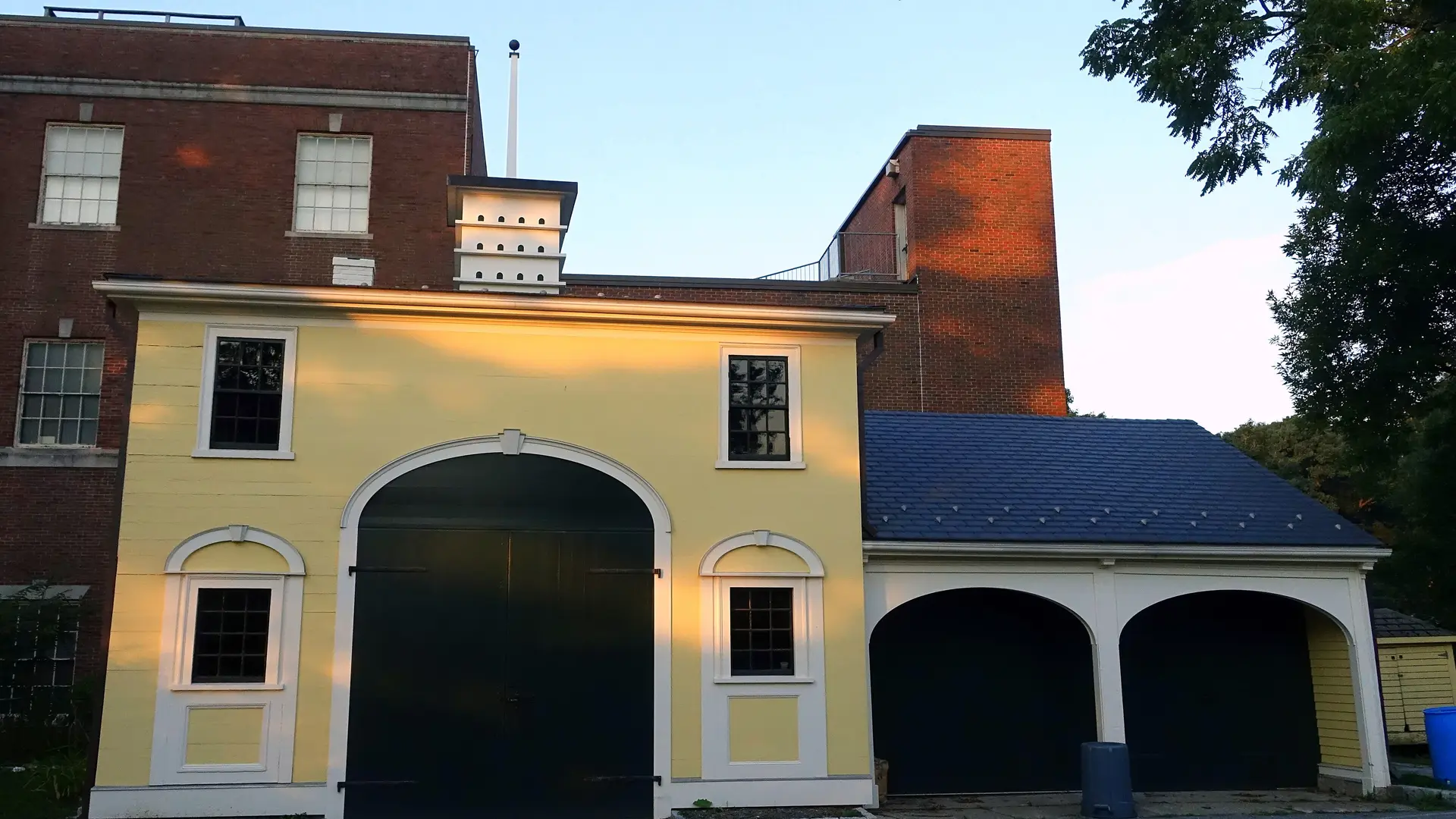
Living near the water on the South Shore means living with salt. It rides the wind off Quincy Bay and Hingham Harbor, coats everything during a nor'easter and never quite leaves the air in Hull or Scituate. Garage doors are mostly steel, and steel and salt do not get along. The damage is slow and largely preventable, though, if you know where to look and what to rinse.
What Salt Air Does to Steel
Salt speeds up rusting by helping moisture conduct the tiny electrical currents that drive corrosion. A film of salt also attracts and holds dampness, so a surface near the shore stays wet longer than the same surface a few miles inland. Galvanized coatings and paint protect steel well until they are scratched or worn through, and then rust starts at that weak point and creeps outward.
On a garage door the weak points are predictable: cut edges, fastener holes, the lower lip of each section and anywhere two metals touch. Hardware inside the garage is not spared, because the building breathes salt air every time the door opens. In towns like Hull, which is nearly surrounded by water, even doors on the sheltered side of a house show it sooner than doors in Braintree or Norwell.
Where Corrosion Shows Up First
Look low. The bottom section, the bottom seal retainer and the bottom brackets sit in the splash zone and stay damp. Lift cables are made of many thin steel strands, and rust between those strands weakens the cable before much shows on the outside. Check where the cable loops onto the bottom fixture. Brown staining, stiffness or a single broken strand is reason enough to request an inspection.
Then look up. Torsion springs rust between the coils, which adds friction and shortens their life. End bearing plates, the center bearing and the cable drums can seize or wear. Track bolts and hinge fasteners develop rust blooms that eventually loosen their grip. None of this is dramatic on any given day, which is why a deliberate look twice a year catches what a daily glance misses.
A Rinse and Wash Routine
Fresh water is the simplest defense. Hose down the outside of the door every month or two in the warmer seasons and after any storm that throws spray, using mild soap a few times a year. Rinse the bottom edge and the lower tracks as well. Avoid a pressure washer at close range, which can drive water past seals and into insulated sections.
Inside, wipe the hardware instead of soaking it. A rag with a little garage door lubricant passed over the springs, hinges and roller stems leaves a thin protective film. Touch up paint chips on the door promptly with a matching exterior paint. Keep the floor near the door swept, since sand holds salt and moisture against the bottom seal and the lowest few inches of track.
Hardware and Materials That Resist Salt
When parts are due for replacement anyway, ask about corrosion-resistant versions. Galvanized or coated torsion springs hold up longer than plain oil-tempered ones in damp air. Stainless steel cables and fasteners are available for many doors. Nylon rollers do not rust at the wheel, and sealed bearings keep salt out. These choices add to the bill, so the technician should explain where they matter most.
For a new door close to the water, material is worth a conversation. Aluminum, fiberglass and vinyl-clad doors do not rust the way steel does, though each has trade-offs in strength, dent resistance and appearance. Steel doors with a good factory finish remain a reasonable option if they are washed regularly. Wood needs diligent painting in a marine climate and is the most demanding to maintain.
Wind, Storms and Door Strength
A garage door is usually the largest and weakest opening in a house. In a coastal gale the pressure on a wide double door is considerable, and a door that flexes too far can pull out of its tracks. Reinforcing struts across the sections, heavier track and proper fastening into sound framing all help. Some doors are built specifically to meet wind-load requirements.
Building codes in Massachusetts set wind design requirements that vary by location, and exposed shoreline sites are generally treated more strictly. If you are replacing a door in Hull, Scituate, Cohasset or along the Quincy shore, ask the contractor and your local building department what applies to your address. Before a forecast storm, close the door fully and do not leave a vehicle parked halfway under it.
After a Flood or Storm Surge
Neighborhoods such as Houghs Neck in Quincy and low-lying stretches of Scituate and Hull have seen coastal flooding during major storms, and salt water sometimes reaches garages. If water has been in yours, treat the door system as suspect. Salt left inside cable strands, bearings and roller stems keeps corroding long after the floor is dry. Rinse everything you can reach with fresh water as soon as it is safe.
Electrical parts are a separate concern. Photo-eye sensors sit only inches above the floor, and their wiring and connections do not tolerate submersion. An opener that was itself under water should not be powered up. Leave the door disconnected from the opener and move it by hand only if it lifts normally. Have a technician check the bottom brackets, cables and sensors before regular use resumes.
Seals, Sand and Summer Humidity
Weather seals work harder near the coast. The bottom seal, sometimes called an astragal, keeps out wind-driven rain, blown sand and the debris a storm leaves behind. Jamb and header seals close the sides and top. Sun and salt harden the vinyl and rubber over time. If the seal is cracked, flattened or no longer touches the floor evenly, replacing it is a modest job.
Humid summer air brings its own trouble. Condensation forms on cool steel inside a closed garage, feeding rust on parts that never see rain. Opening the door for a while on dry days helps the space air out. Wood jambs and trim swell and can rub the door edges. If the door starts binding in July and frees up in October, humidity is the likely reason.
Deciding Between Repair and Replacement
Corroded hardware is normally a repair. Cables, springs, rollers, hinges, bearings and bottom fixtures can all be renewed on a door whose sections are still sound, and doing them together often makes sense because they have aged in the same air. A technician will sometimes recommend replacing both cables or both springs even if only one looks bad, for that reason.
The sections themselves decide the larger question. Surface rust can be sanded, primed and painted. Rust that has eaten through the bottom of a section, or loosened the stiles where hinges attach, has gone past cosmetic. At that stage a new bottom section, if one can be matched, or a new door is the honest answer. Cost depends on size, material and hardware, and is quoted after an inspection.
How a South Shore Request Is Handled
To get a door looked at, complete the short form and mention how close you are to the water, since that shapes what the contractor brings. This site only makes the introduction. We forward your request to an independent garage door contractor serving the South Shore towns, from Quincy, Weymouth and Braintree down through Hingham, Hull, Cohasset and Scituate, and that contractor takes it from there.
Expect a phone call to go over the symptoms and agree on a visit. Once the technician has examined the door and its hardware, you hear what is corroded, what is still serviceable and what each option would cost. Then the choice is yours. After a big coastal storm many households need help at once, so ask the technician how soon they can realistically come.
Need a hand with your garage door?
Send the short form (Phone: TODO - number coming soon). A local independent technician calls you back and explains the options and the price before any work starts.