
Replacing a garage door is a bigger decision than fixing one, and in Newton and Brookline it often involves an older house with a particular look. The door may cover a third of the front of the home, sit under a bedroom, or face a street where neighbors notice changes. This guide lays out the choices in the order they usually come up, so the conversation with a contractor is easier.
Signs a Door Has Reached the End
A door seldom fails all at once. The usual signs build over years: rust blistering along the bottom section, cracks spreading from the hinge screws, wood rails gone soft, or sections that bow when the door is halfway up. Repairs start arriving closer together. When the structure of the sections is compromised, new springs and rollers only postpone the decision.
Sometimes the reason is not wear at all. An uninsulated door under a bedroom makes that room cold. A door without modern pinch protection or with an obsolete opener raises safety concerns. Or the house has been renovated and the old door no longer suits it. All of these are legitimate reasons, and a technician can help you sort what is urgent from what is a preference.
Garages You Find in These Two Towns
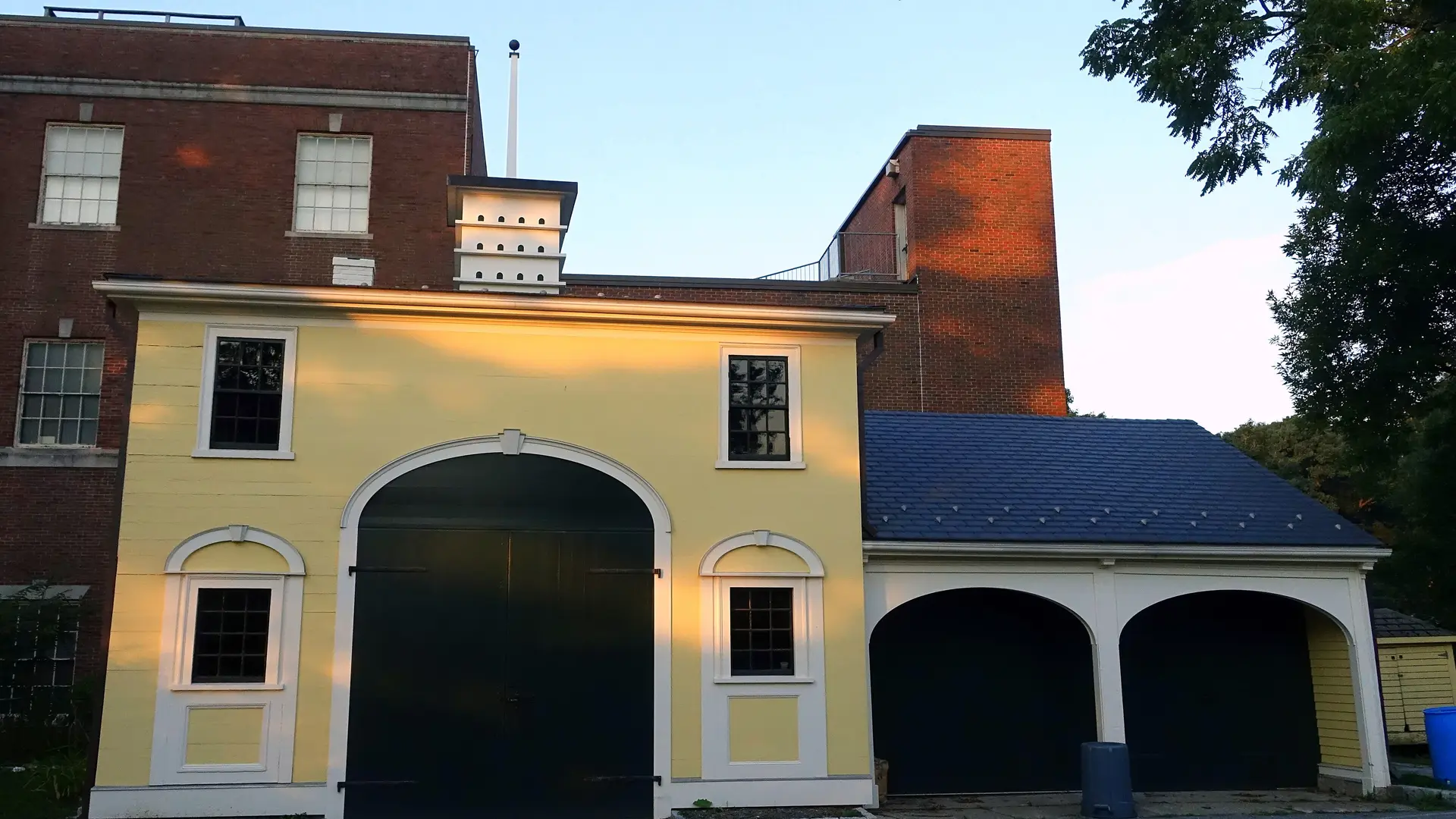
Newton is a city of thirteen villages, and the garages change from one to the next. Around Newton Centre, Waban and West Newton, older colonials and Tudors often have a detached two-car garage at the end of a long driveway. Oak Hill and parts of Auburndale have more post-war ranches and split-levels with an attached or under-house garage. Door sizes are not always standard in the older buildings.
Brookline is tighter. Near Coolidge Corner and Brookline Village, garages are frequently small, shared or tucked beneath a building, while Fisher Hill and the Chestnut Hill side have larger homes with carriage houses and multi-bay garages. The town has long restricted overnight street parking, so a working garage carries real value there. Access for delivery and installation is worth discussing early.
Steel, Wood, Composite or Aluminum and Glass
Steel is the common choice. It is strong for its weight, comes in many panel designs and needs little care beyond washing and touching up chips. Thickness varies, and thinner steel dents more easily. Wood offers the richest appearance and can be built to match unusual openings, but it is heavy and needs regular painting or sealing to survive New England moisture.
Composite and wood-look steel doors aim for the appearance of wood without the upkeep, and they have become popular on period homes. Full-view doors made of aluminum frames and glass suit modern renovations and bring daylight into the garage, though they insulate less well. Whatever the material, ask how the finish holds up to road salt and what maintenance the manufacturer expects from the owner.
Insulation and Rooms Above the Garage
Insulation is described by R-value: the higher the number, the more the door resists heat flow. Doors come as a single steel layer with no insulation, a steel layer with insulation and a backing, or a sandwich of two steel skins around a foam core. The sandwich type is stiffer and quieter as well as warmer, which matters on a wide double door.
How much insulation you need depends on the garage. If it is attached, heated, or has living space above, a well-insulated door paired with good perimeter seals usually improves comfort in the adjoining rooms. For a detached garage used only for parking, the gain is modest. Remember that the door is one part of the envelope; uninsulated walls and a leaky side door limit what it can do.
Style on an Older Street
A garage door should look as though it belongs to the house. On a colonial or a shingle-style home, recessed panels or a carriage-house pattern with simple hardware usually reads well. Mid-century ranches often suit flush or long horizontal panels. Windows in the top section add light and break up a large surface, and the grille pattern can echo the windows of the house.
Both communities have local historic districts, and a property inside one may need approval for exterior changes that can be seen from a public way. Newton and Brookline each have a preservation or historical commission that can tell you whether your address is affected. Check before ordering, because a custom door cannot simply be sent back. The contractor installs the door but does not obtain that approval for you.
Springs, Tracks and Hardware Choices
A new door should come with new springs matched to its exact weight. Standard torsion springs are commonly built for about 10,000 cycles, one cycle being a full open and close. A household that uses the garage as its front door can run through that in well under a decade, so ask whether higher-cycle springs are available. They cost more up front and last proportionally longer.
The rest of the hardware deserves the same attention. Nylon rollers with sealed bearings run quieter than plain steel ones. Heavier-gauge tracks and hinges resist loosening. A strut across the top section protects it from the push of the opener. If the garage has low headroom or a sloped ceiling, the track layout needs to be planned around it, which is one reason measurements are taken on site.
Choosing an Opener for the New Door
It often makes sense to consider the opener at the same time. Chain drives are durable and louder. Belt drives are quieter and a common pick beneath bedrooms. Screw drives have fewer moving parts but can be noisy in cold weather. Wall-mount jackshaft openers sit beside the door, leave the ceiling clear and suit high or obstructed ceilings, provided the door uses a torsion spring.
Features worth asking about include battery backup for storm outages, rolling-code remotes that change their signal with each use, a keypad by the door, and compatibility with the HomeLink buttons in your car. Many openers now connect to a phone app. An older opener in good condition can sometimes be reused on a new door, but it must have working photo-eyes and be reset for the travel and force of the new door.
Questions to Ask Before You Agree
Go into the visit with a short list. What exactly is included: door, tracks, springs, seals, removal of the old door? What is the lead time for the model and color you want, since special orders can take weeks? Who handles any carpentry needed on the jambs or header? Does the town require a permit for this work, and if so who applies for it?
Ask also what the manufacturer covers on the door and hardware and for how long, and get that in writing from the contractor instead of relying on a brochure. Find out what affects the price: size, material, insulation level, windows, hardware grade and any changes to the opening. A clear written description of the job protects both sides. Take your time; a door ordered in haste is one you look at for twenty years.
From Request to Callback: The Process
This site is a starting point, not an installer. When you submit the form, we pass your request to an independent local contractor who handles door replacement in Newton, Brookline and the neighboring towns. Include the rough size of the opening, whether the garage is attached, and any style you have in mind. Photos of the existing door from inside and outside are helpful if you have them.
The contractor then gets in touch by phone, asks about the project and arranges to measure the opening. After seeing the garage they go over door choices, describe the work involved and state the price before anything is ordered. You are under no obligation at any point. Ask about scheduling during the call, because lead times shift with the season and the product.
Need a hand with your garage door?
Send the short form (Phone: TODO - number coming soon). A local independent technician calls you back and explains the options and the price before any work starts.