
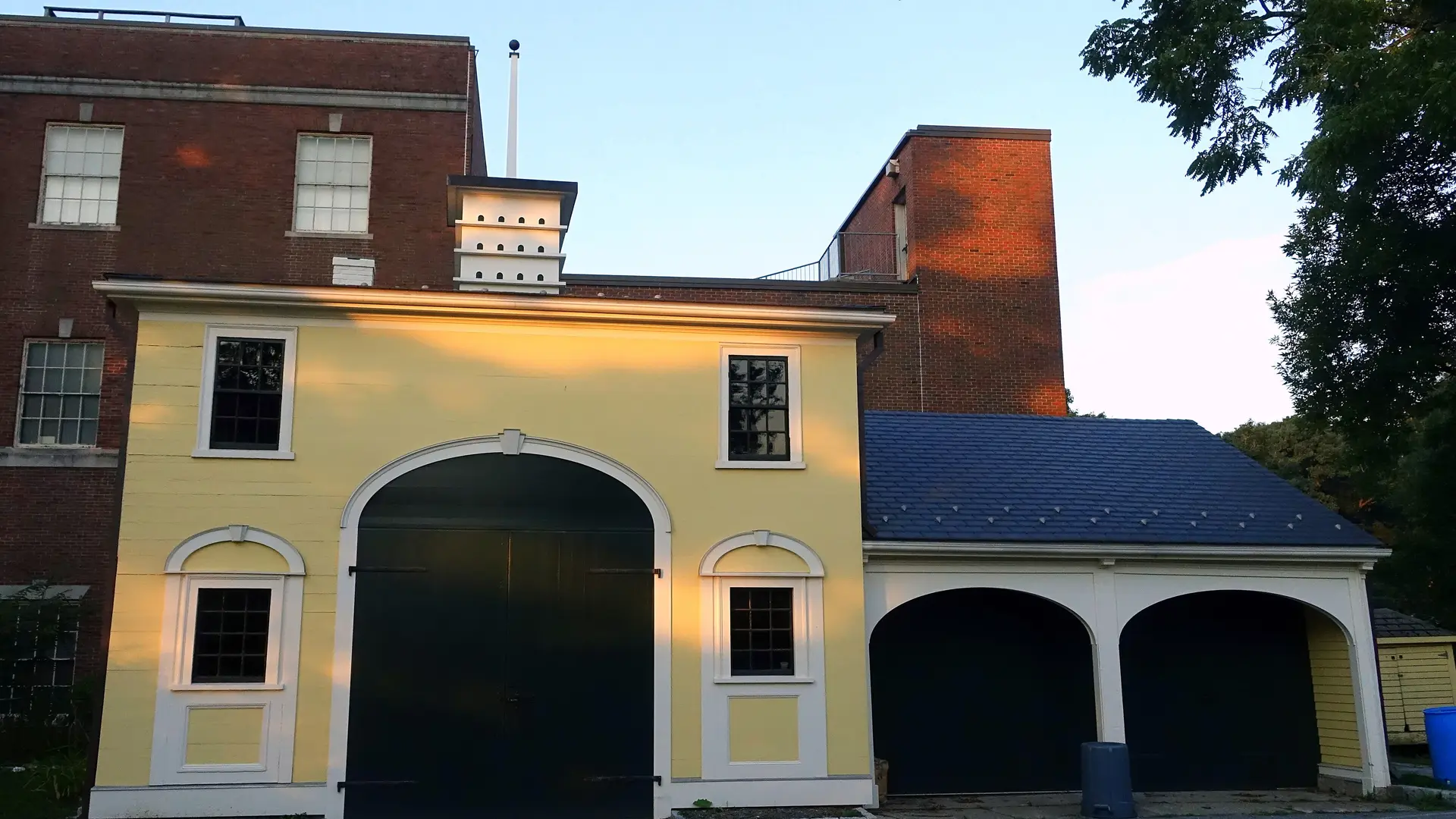
Cambridge and Somerville are among the most densely built communities in Massachusetts, and their garages show it. Many sit at the end of a narrow shared driveway behind a triple-decker or a two-family, built when cars were smaller and openers did not exist. These buildings can be made to work well with a modern door, but they raise questions a newer suburban garage never does. This guide walks through them.
The Garages These Neighborhoods Actually Have
Walk the side streets off Davis Square, through Winter Hill or around Cambridgeport and you see the pattern: a small detached garage at the back of the lot, often wood framed or built of concrete block, with a single narrow opening. Some hold one car, some were built as a row of bays shared by the units in the house. A good number date from the early decades of the automobile.
Other arrangements show up too. West Cambridge and parts of Avon Hill have former carriage houses with wide, tall openings. Hillier streets in both cities have garages tucked under the house at basement level, reached by a short steep ramp. Newer infill townhouses usually have a conventional attached garage. Each type puts different limits on door size, track layout and where an opener can go.
Old Door Types Still in Service
Not every door here is a modern sectional. One-piece tilt-up doors, which swing out at the bottom and pivot overhead as a single slab, are still found on older garages. So are side-hinged swing doors and the occasional sliding door on an overhead rail. They can be charming, and some owners keep them on purpose, but parts are scarce and safety features are few.
A one-piece door kicks outward as it rises, which is awkward when the driveway is short or the sidewalk is close. Its side springs are exposed and powerful. If you have one that works, keep it lubricated and keep fingers away from the pivot arms. If it is failing, most contractors will suggest converting the opening to a sectional door instead of rebuilding the old hardware.
Low Headroom and Narrow Openings
A standard sectional door wants clear space above the opening for the curved track and the torsion spring, plus room along the ceiling for the horizontal track. Old garages often lack it. Rafters, a low ceiling or a beam just above the header can leave only a few inches. Low-headroom track kits and rear-mounted springs exist for exactly this situation, and a technician can say whether yours qualifies.
Width is the other squeeze. Openings sized for cars of a century ago can be tight for a current sedan, never mind an SUV. Widening means structural work on the header and is a job for a builder, not a door installer. Short of that, the tracks, jambs and seals can be set to preserve every available inch. Measure the clear opening before you describe the job.
Framing, Rot and Settled Slabs
A door is only as sound as what it is fastened to. In an older garage the jambs and header may be soft from decades of splashback, and the track brackets may be held by lag screws that no longer bite. Before new hardware goes on, the wood behind it needs to be solid. Sometimes that means a carpenter replaces the jambs first.
Floors tell their own story. Many old slabs have cracked, heaved with frost or settled into one corner, so the door meets the concrete on one side and shows daylight on the other. A larger bottom seal can absorb a modest slope. Bigger gaps may call for a threshold or for scribing the bottom of a wood door. Point out the gap when the contractor visits.
Wood Doors, Paint and Upkeep
Plenty of older garages in these two cities still have wood sectional or swing doors. Wood looks right on a period house and can last a long time if it stays painted, particularly along the bottom rail and the end grain. Once water gets in, the lower section swells, the joints open, and the door gains weight that its springs were never sized for.
Scraping and repainting an old door raises one caution. Paint applied decades ago may contain lead, so sanding it dry in a closed garage is a bad idea. Ask a painter who follows lead-safe methods if the coating is old and flaking. If the door is too far gone, steel and composite doors with a carriage-house look give a similar appearance with far less maintenance.
Historic and Conservation District Questions
Parts of Cambridge fall within historic districts or neighborhood conservation districts, and Somerville also has locally designated historic properties. In those areas, changes visible from the street, which can include a garage door, may need approval before work is done. The rules differ from one district to the next. The city commission that handles historic preservation is the place to ask, and it is wise to ask early.
Even outside a designated district, the look of the door matters on a street of century-old houses. Recessed-panel and carriage-style doors, with or without a row of windows across the top, tend to sit comfortably beside older architecture. A contractor can show you what is available in your size. They do not handle the approval process, so confirm that step yourself before ordering.
Adding an Opener to an Old Garage
Many of these garages were never wired. An opener needs a grounded outlet near the motor, so an electrician may have to run power from the house, sometimes underground across the yard. With a low ceiling, a conventional rail opener may not fit above the open door. A wall-mount jackshaft opener, which turns the torsion shaft from the side, can solve that when the door has the right spring setup.
Any opener installed now comes with photo-eye sensors, which have been required on residential units from 1993 onward under the UL 325 standard. In a narrow garage, mount points for the sensors and the wall button take some thought. A keypad outside is handy when several households share the building. If the old door is heavy or out of balance, it must be corrected first; an opener is not a fix for a bad door.
Tight Access and Shared Driveways
Getting a door to the garage can be its own project. Sections for a single door are manageable, but they still have to travel down a driveway that may be barely wider than a car and shared with the neighbor. Tell the contractor about fences, low wires, parked cars and any steps. Street parking near Union Square or Mid-Cambridge is limited, so mention where a work vehicle can stop.
If the garage serves more than one unit, sort out who is responsible before requesting work. In a condominium the door may be common property, and the association may need to approve or pay for the job. A landlord's permission is needed if you rent. Sharing those details at the start prevents a wasted visit and lets the technician bring the right person into the conversation.
Requesting Help for an Older Garage
When you are ready, send a request through the form with as much detail as you can: the type of door, the size of the opening, the ceiling height and what is going wrong. This site is a referral service, not a door company. Your details are forwarded to an independent contractor who serves Cambridge and Somerville and is used to the quirks of older buildings.
That contractor phones you, talks through the situation and sets a time to see the garage. Old structures hide surprises, so expect the visit to include measuring and a close look at the framing. Afterward you receive a clear explanation of what can be done, along with the price, and nothing proceeds until you say yes. Timing is something to raise during that first call.
Need a hand with your garage door?
Send the short form (Phone: TODO - number coming soon). A local independent technician calls you back and explains the options and the price before any work starts.