
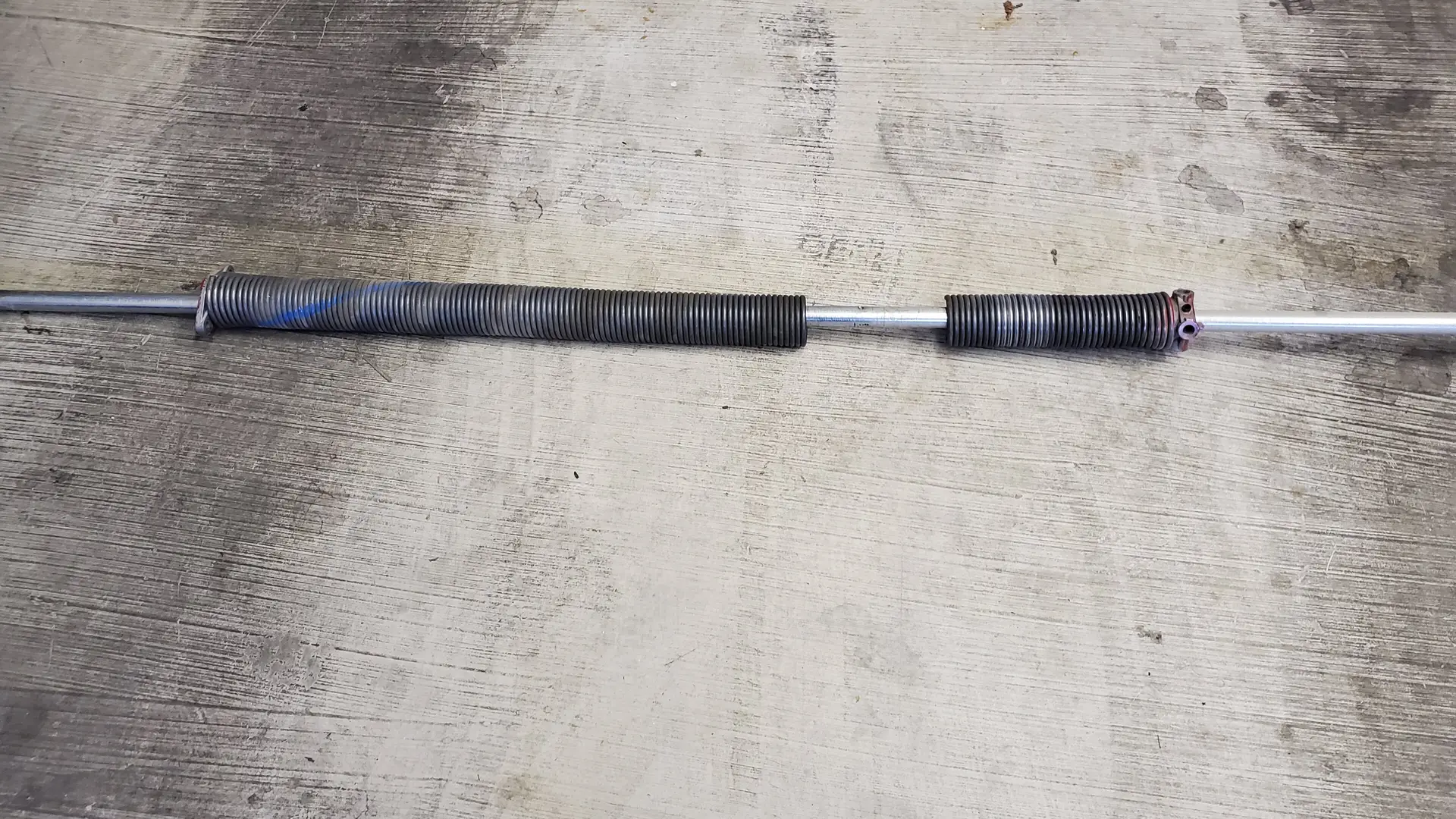
What causes garage door springs to break?
Independent local contractors · Price explained before work starts · Boston and 61 nearby towns
At a glance Who does the work: an independent local contractor · Price: explained on site before work starts · Area: Boston and 61 nearby towns · How: the short form
The full answer
A spring is a wear part. A torsion spring twists tighter as the door closes and unwinds as it opens, and steel can only take so many of those flexes before a crack forms and runs through the wire. A household that uses the garage as its front door might cycle it six or eight times a day, which uses up a standard spring far sooner than occasional use would.
Corrosion speeds things along. Rust pits the wire and adds friction between coils, so the spring fails early at the weakened spot. Springs also tend to let go in cold weather, when steel is less forgiving; many break on the first frigid mornings of the season, often while the door is closed and the spring is under its greatest load. Coastal salt air and damp unheated garages add to it.
Installation matters too. A spring too light for the door is overworked from day one, and adding insulation or a heavier panel later changes the balance. A technician weighs the door, chooses wire size and length to suit, and can offer higher-cycle springs if your use is heavy. A light coat of garage door lubricant on the coils once or twice a year slows rust. Never adjust springs yourself.
Safe things to check first
- Look for rust or a visible gap along the spring coils.
- Think about how many times a day the door is used.
- Notice whether the door has started feeling heavier or slower.
Garage doors across Greater Boston
Around Boston, the same street can hold a century-old carriage house, a triple-decker with a shared driveway and a renovated home with a smart opener. Local contractors see all of it, which is why a request here goes to someone who works in your part of the metro area rather than to a distant call center.
Storms matter too. A nor'easter can take out power for hours, wind-driven rain finds worn seals, and plowed snow piled against a door adds weight and moisture where the cables and bottom section already have the hardest life.
Do this first: a homeowner checklist
- Stop using the doorLeave the door in its current position. Running a damaged door again can bend sections, strip the opener gear or drop the door.
- Keep people, pets and vehicles clearA door that is crooked, hanging or stuck partway can move without warning. Keep the opening and the area under the door clear until a technician has made it safe.
- Do not pull the red release cord with the door upThe red handle is for a door that is all the way down. Pulling it with the door raised and a broken spring can let the full weight fall.
- Note what you see and hearA ten-second look helps: a gap in the spring, a slack cable, a roller out of the track, blinking sensor lights, or a hum from the opener with no movement.
- Send a requestFill in the short form with the job, your town and a phone number. A local technician calls back, and you can ask about timing then.
What happens after you send a request
- Tell us what the door is doingJob type, your town, name, phone and ZIP code. It takes under a minute, and you only describe the problem once.
- The request goes to a local technicianAn independent garage door contractor covering Greater Boston receives the request. That contractor, not this site, does the work.
- You get a callbackThe technician calls to ask what the door is doing and to arrange a visit. That call is the moment to ask about timing.
- Options and price, before any workThe technician inspects the door, tells you what failed and why, and lays out the choices and the cost before touching a tool.
- You decideGo ahead, wait, or get a second opinion. Sending a request does not commit you to anything.
When it cannot wait
Some problems can wait a few days and some cannot. A noisy door can usually wait; a door hanging by one cable, a trapped car or an opening that will not secure should not. Tell the technician which it is, and ask about timing on the callback.
How garage door spring replacement is priced
Prices for garage door spring replacement are set by the contractor after seeing the door, not by this website. The main factors are:
- Torsion or extension system, and whether there is one spring or two
- Door weight and height, which decide spring size
- Standard or high-cycle springs
- Condition of cables, drums, bearings, and the shaft
- Headroom and access around the spring assembly
When you compare quotes, compare the same thing: the same parts grade and the whole job, not a low opening number with extras added later.
Why garage door spring replacement is work for a technician
You can look at the springs from the floor and spot a gap in a torsion coil or a stretched, dangling extension spring. You can also note the door's size and material for the contractor. Do not try to wind, unwind, or remove a spring, and do not loosen set screws, cable drums, or bottom brackets. Stored spring energy can cause severe injuries, even to people who are handy.
Door and opener brands
Most garages here have an opener or door from one of a handful of makers: Wayne Dalton, Clopay, Amarr, Overhead Door, Marantec and CHI Overhead Doors. Tell the technician which one you have, and the model if it is printed on the unit, so they can arrive with the right information. Brand names are used only to identify equipment.
Care that fits a New England garage
- Have the door balance checked once a year so weak springs are caught early.
- Spray the coils lightly with garage door lubricant each fall to slow rust and reduce friction.
- Replace both springs together on a two-spring door so they wear at an even pace.
- Ask about higher-cycle springs if your garage door is the main entrance to the house.
Towns covered around Boston
Requests are taken for Boston and 61 nearby cities and towns in Suffolk, Middlesex, Norfolk, Essex and Plymouth counties. Pick your town:
Middlesex County
Norfolk County
Straight answers about this service
- No pressureYou hear the options and decide. Sending a request does not commit you to a repair.
- Your details stay on taskWhat you send is passed to a contractor for this request. It is not sold for unrelated marketing.
- Repair and replace, both on the tableAsk the technician to lay out the repair and the replacement side by side when a door is near the end of its life.
- A referral service, said plainlyBoston Garage Door connects homeowners with independent local garage door contractors. It is not the company that does the repair.
- One short requestJob type, town, name, phone and ZIP code. No calling around, no long questionnaire.
- Local, independent contractorsThe request goes to a contractor who works in Greater Boston, not to a national call center.
More specific pages
Looking for something more specific? These pages cover the services and communities people ask about most:
- Garage Door Spring Replacement
- Why does my garage door reverse before closing?
- Why does my garage door stop halfway?
- Why is my garage door crooked?
- Why does my garage door only open a few inches?
- Why is my garage door remote not working?
- All questions and answers
Garage door terms worth knowing
- Cycle rating
- How many open-and-close cycles a spring is built for. Standard springs are commonly rated around 10,000 cycles.
- R-value
- A measure of how well an insulated door resists heat flow. Higher numbers insulate more.
- Astragal
- Another name for the flexible seal along the bottom edge of the door.
- Torsion spring
- A tightly wound spring on a shaft above the door. It twists to store the energy that lifts the door's weight.
- Extension spring
- A long spring beside each horizontal track that stretches as the door closes. It should always have a safety cable through it.
- Lift cable
- The steel cable on each side that connects the bottom of the door to the drum and carries its weight.
Send the request in under a minute
One request, one callback. The technician explains what the door needs and what it costs, and you decide.
Frequently asked questions
What causes garage door springs to break?
Mostly metal fatigue. Every open-and-close cycle flexes the spring, and standard torsion springs are commonly built for around ten thousand cycles. Rust, cold weather, lack of lubrication and springs that were sized wrong for the door all shorten that life. Heavy daily use reaches the limit sooner.
How do I know which kind of springs I have?
Look above the closed door. A coil wrapped around a steel shaft across the header is a torsion spring. Long springs running alongside the horizontal tracks on each side are extension springs. Either way, mention what you see when the contractor calls.
Can I open my garage door with a broken spring?
It is not a good idea. Without the spring, you or the opener are lifting the full weight of the door, which can be well over 150 pounds on a two-car steel door. Openers can burn out and doors can fall. Leave it closed if you can.
Should both springs be replaced if only one broke?
Usually, yes. Both springs were installed together and have done the same number of cycles, so the second is likely near the end of its life. Replacing the pair also keeps the door balanced. The contractor will explain the choice and price each way.
Is this the company that does the work?
Boston Garage Door is a service that connects homeowners with local contractors. The work itself is done by the independent garage door contractor who takes your request.
Do you give prices online?
No. The cost depends on the door, the parts involved and what the technician finds, so the contractor quotes after looking at it and explains the price before any work starts.
How long does a typical repair take?
Many common repairs are finished in a single visit, but it depends on the fault and on parts. The technician can tell you once they have seen the door.
Which towns do you cover?
Boston and 61 nearby cities and towns across Suffolk, Middlesex, Norfolk, Essex and Plymouth counties. Pick your town in the form; if it is not listed, choose the last option and name it when the technician calls.
What should I have ready when the technician calls?
What the door is doing, any sounds it made, whether it is up, down or stuck partway, the opener brand if you can see it, and your town and ZIP code.
I rent. Can I send a request?
Yes, but repairs to the building are normally the owner's decision. It is usually simplest to tell your landlord or property manager first.